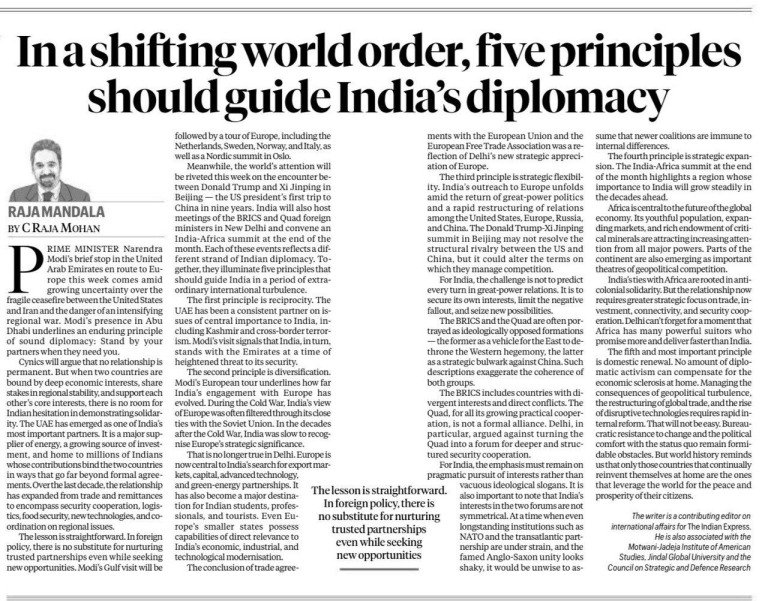
Core Principles of Indian Diplomacy in a Shifting World Order
1. Reciprocity in Partnerships
- Definition: Cultivating trust by standing by strategic partners during their times of crisis.
- Application: India’s relationship with the UAE serves as a prime example. The UAE has consistently supported India on issues like Kashmir and cross-border terrorism. In return, India demonstrates solidarity through high-level visits and support when the Emirates face heightened security threats.
2. Diversification of Engagement
- Strategic Shift: Moving away from the Cold War-era lens where ties were often filtered through a single partner (e.g., the Soviet Union).
- Modern Focus: Broadening engagement with Europe to secure export markets, advanced technology, capital, and green-energy partnerships. Recent trade agreements with the European Union and EFTA highlight this new strategic appreciation for diversified economic ties.
3. Strategic Flexibility
- Pragmatism Over Ideology: Pursuing national interests through a pragmatic approach rather than adhering to rigid ideological blocks.
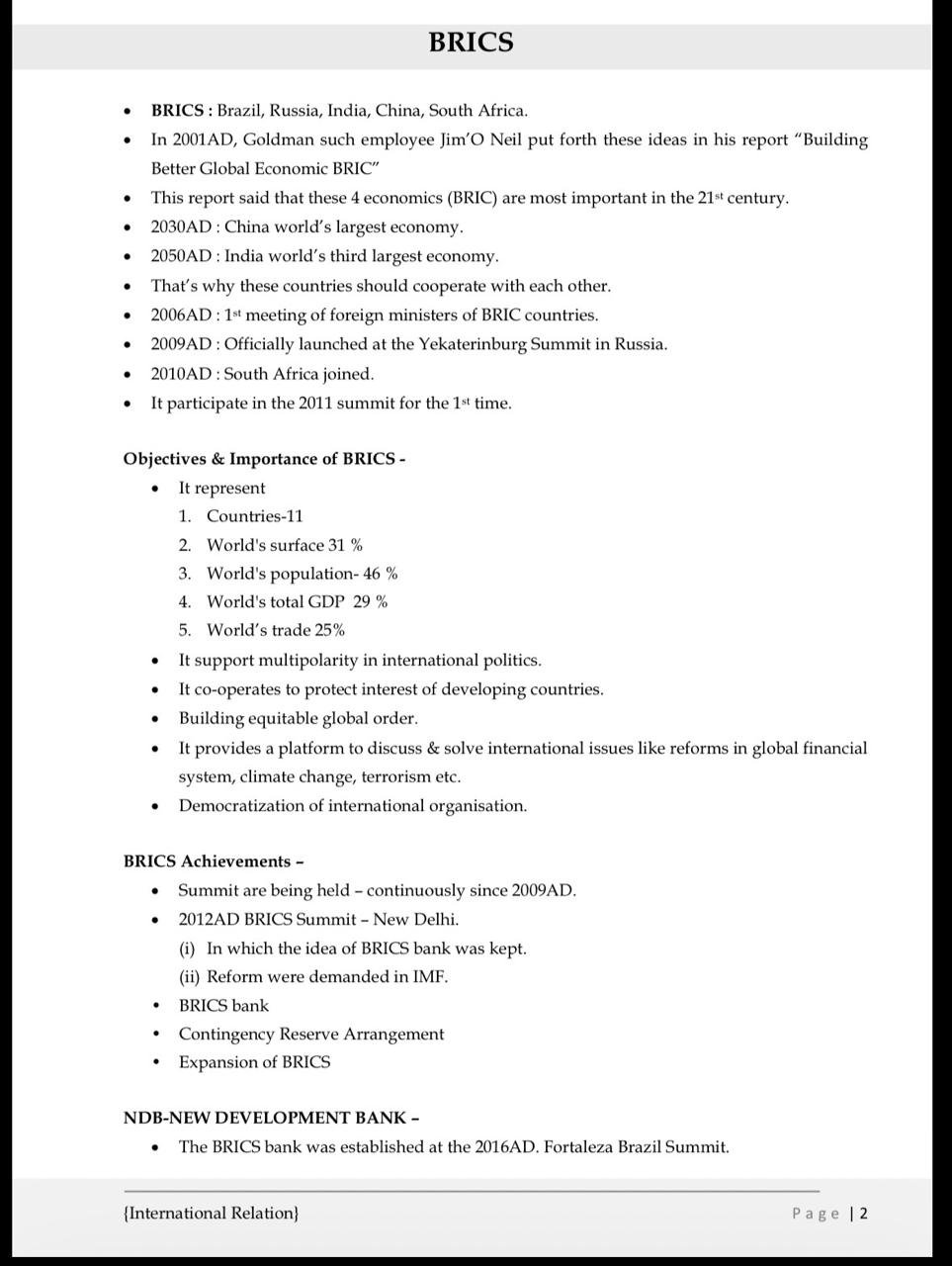
- Multi-alignment: India maintains active roles in both the BRICS (often seen as a counter to Western hegemony) and the Quad (a group focused on maritime security and a stable Indo-Pacific). The goal is to leverage these forums for deeper security and economic cooperation without entering formal alliances.
4. Strategic Expansion (The Africa Focus)
- Future Growth Centers: Recognizing regions like Africa as central to the future global economy due to their youthful populations and critical minerals.
- Evolving Ties: Transitioning from historical "anti-colonial solidarity" to a relationship defined by trade, investment, connectivity, and security cooperation. This is essential as Africa becomes a theater for global geopolitical competition.
5. Primacy of Domestic Renewal
- The Internal-External Link: Acknowledging that diplomatic activism is ineffective if not backed by a strong domestic economy.
- The "Most Important" Principle: Internal reforms are necessary to overcome "economic sclerosis" and bureaucratic resistance. Only a country that continually reinvents itself at home can effectively leverage global opportunities for the peace and prosperity of its citizens.
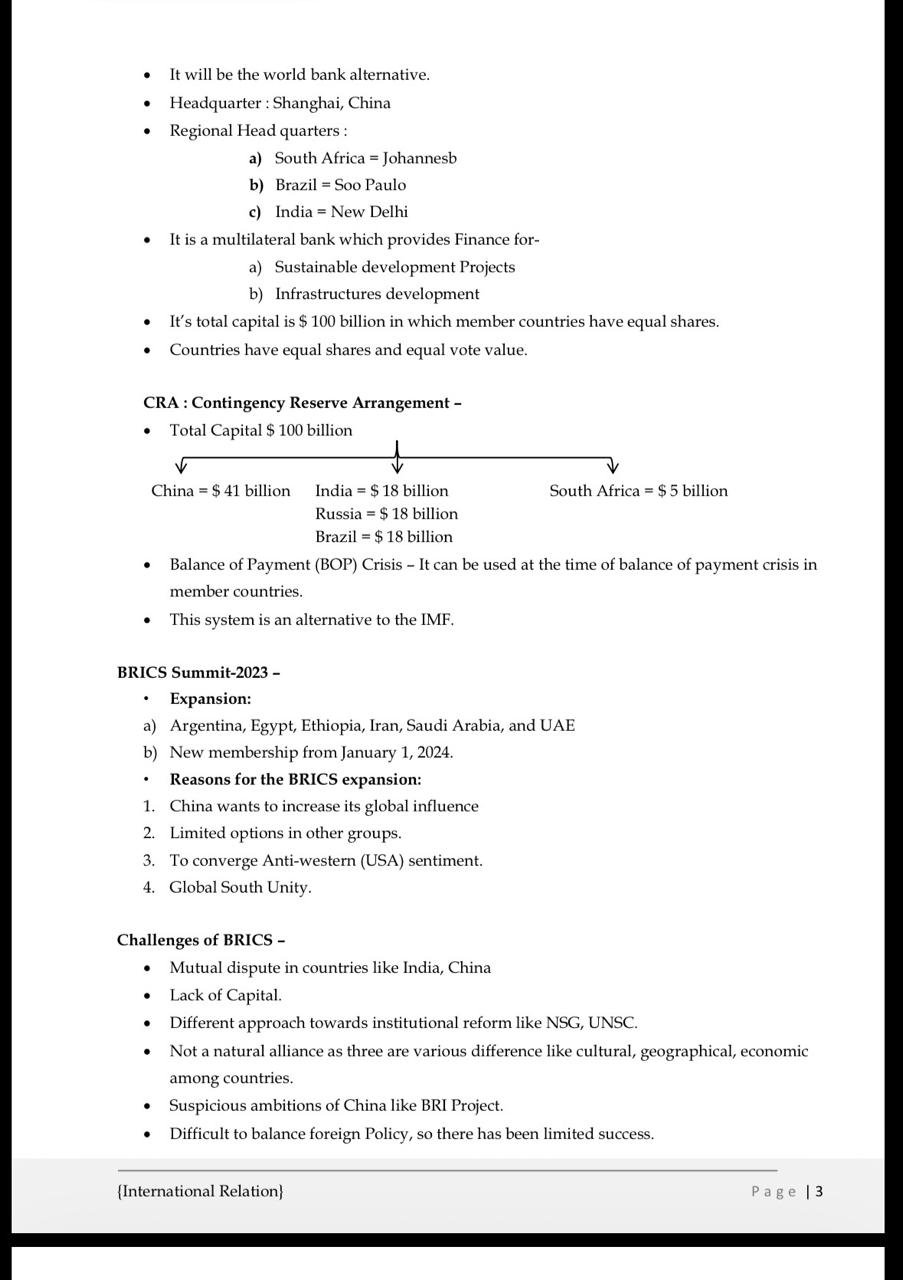
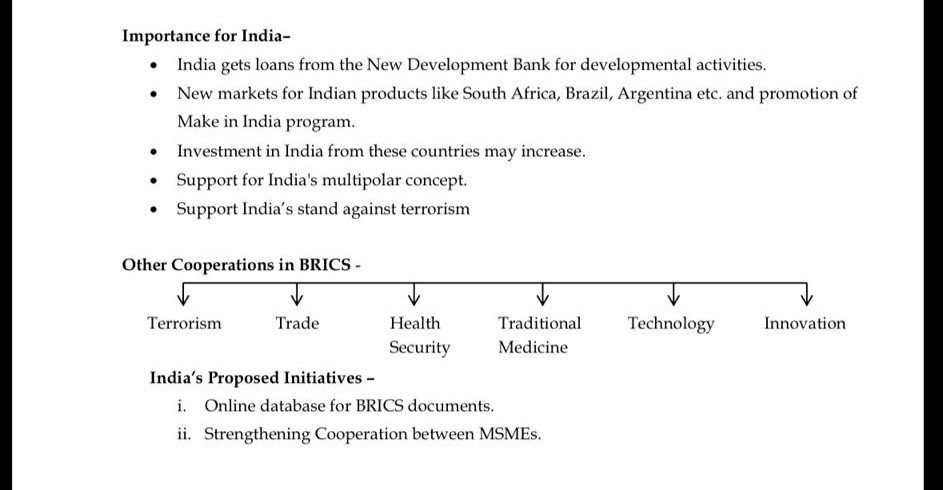
Topic 2 Brics 2026
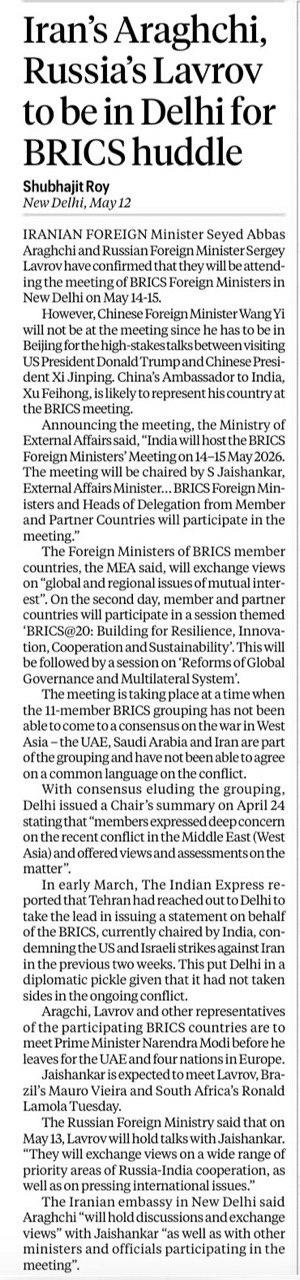
The BRICS Foreign Ministers' Meeting is scheduled for May 14–15 in New Delhi, hosted by India under its current chairmanship.
- Leadership: The meetings will be chaired by India's External Affairs Minister, S. Jaishankar.
- Key Attendees: Iranian Foreign Minister Seyed Abbas Araghchi and Russian Foreign Minister Sergey Lavrov have confirmed their participation.
- Notable Absence: Chinese Foreign Minister Wang Yi will not be attending due to high-stakes talks in Beijing between Chinese President Xi Jinping and US President Donald Trump. China will instead be represented by its Ambassador to India, Xu Feihong.
Strategic Challenges: The West Asia Dilemma
1.Internal Grouping Fractures: The expanded 11-member BRICS grouping is currently struggling to find a common voice regarding the ongoing war in West Asia. Key Middle Eastern members—specifically the UAE, Saudi Arabia, and Iran—have not been able to agree on common language concerning the conflict.
2.India's "Diplomatic Pickle": In early March, Tehran requested that New Delhi take the lead in issuing a formal BRICS statement condemning US and Israeli strikes against Iran. This placed India in a difficult diplomatic position, as New Delhi has strictly maintained a stance of not taking sides in the ongoing conflict.
Key Agendas & Thematic Sessions
Session 1: Focused on the theme, "BRICS@20: Building for Resilience, Innovation, Cooperation and Sustainability."
Session 2: Focused on "Reforms of Global Governance and Multilateral System.
Watch Video :-
India to Host BRICS Foreign Ministers Meeting in New Delhi, EAM Dr. S Jaishankar to Chair Meet Click Here 👈