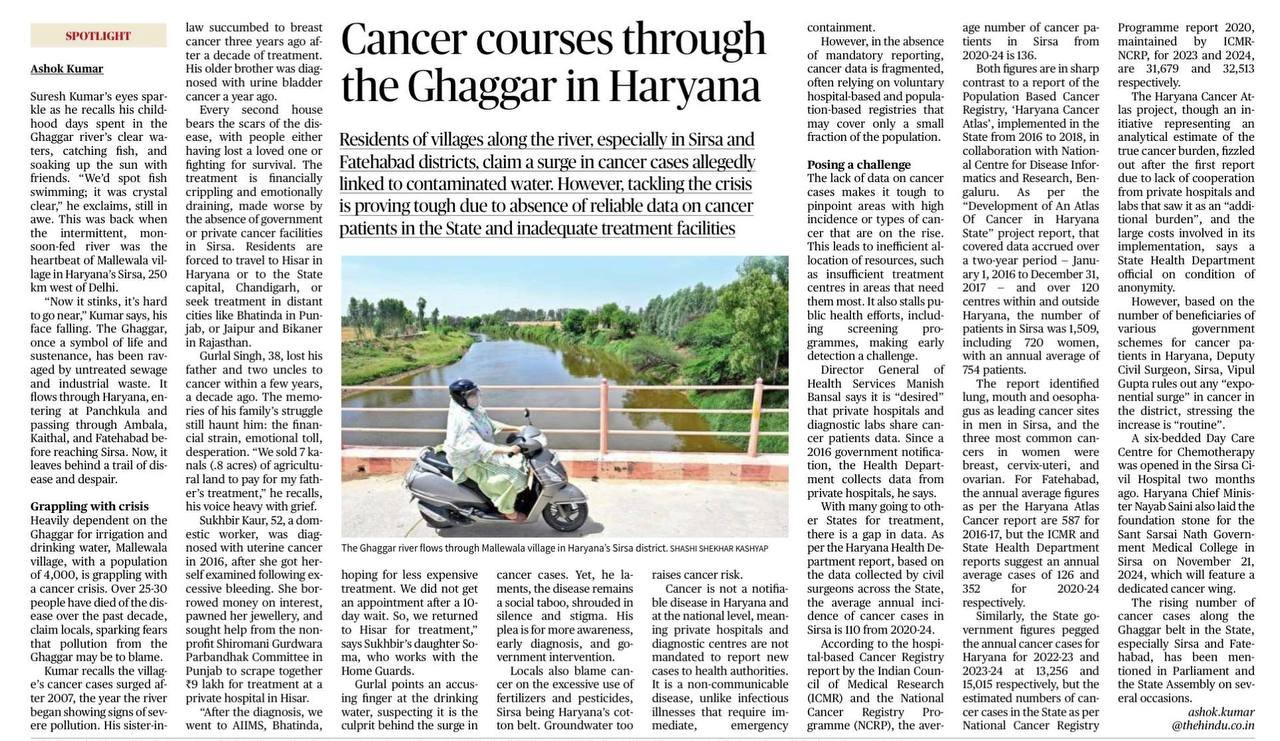
Why in News?
- Villages along the Ghaggar River in Haryana—particularly Sirsa and Fatehabad—are witnessing a concerning rise in cancer cases.
- Residents attribute this trend to polluted river water, contaminated groundwater, and discharge of untreated sewage and industrial effluents.
Geographical Spread:-
- The Ghaggar river flows through multiple districts of Haryana, including:
- Sirsa
- Fatehabad
- Kaithal
- Ambala
- Panchkula
- Villages like Mallewala (Sirsa) are reported as severely affected hotspots.
Nature of the Crisis:-
- A higher incidence of cancers has been reported, including:
- Breast cancer
- Urinary bladder cancer
- Lung cancer
- Oral cancer
- Oesophageal cancer - In Mallewala village alone, around 25–30 cancer-related deaths have reportedly occurred over the past decade.
Probable Causes:-
Discharge of untreated sewage and industrial waste into the river Intensive use of chemical fertilisers and pesticides in the cotton belt Groundwater contamination due to leaching of toxins Prolonged exposure to polluted drinking water
Why the Crisis Remains Underestimated:-
- Cancer is not a notifiable disease in India, leading to gaps in reporting.
- Private hospitals and diagnostic centres are not mandated to share data.
Discrepancies in estimates highlight weak surveillance:
- Civil surgeon data: ~110 cases/year (2020–24)
- Hospital registry: ~136 cases/year
- Haryana Cancer Atlas: ~754 cases/year (2016–17)
Challenges in Treatment:-
- Limited oncology facilities in Sirsa district
- Patients often travel to cities like Hisar, Chandigarh, Bathinda, and Jaipur
High financial costs and emotional strain on families
Recent Government Initiatives:-
- Establishment of a 6-bed day-care chemotherapy centre at Sirsa Civil Hospital Proposal for a government medical college in Sirsa with a cancer care wing Efforts to improve cancer data collection by involving private healthcare providers.
Key Structural Issues:-
- Absence of mandatory cancer reporting framework
- Weak disease surveillance in rural areas
- Inadequate healthcare infrastructure
- Limited access to early screening and diagnosis
- Notify cancer as a reportable disease in high-risk regions
- Establish a comprehensive cancer registry covering public and private sectors
- Strengthen pollution control measures in the Ghaggar basin
- Expand local oncology infrastructure and screening programmes
- Conduct scientific epidemiological studies to establish causal links
Conclusion:-
The rising cancer burden along the Ghaggar river reflects a complex intersection of environmental degradation and public health gaps. Addressing it requires an integrated approach combining pollution control, robust health surveillance, and accessible cancer care to prevent a localized crisis from escalating into a larger public health emergency.