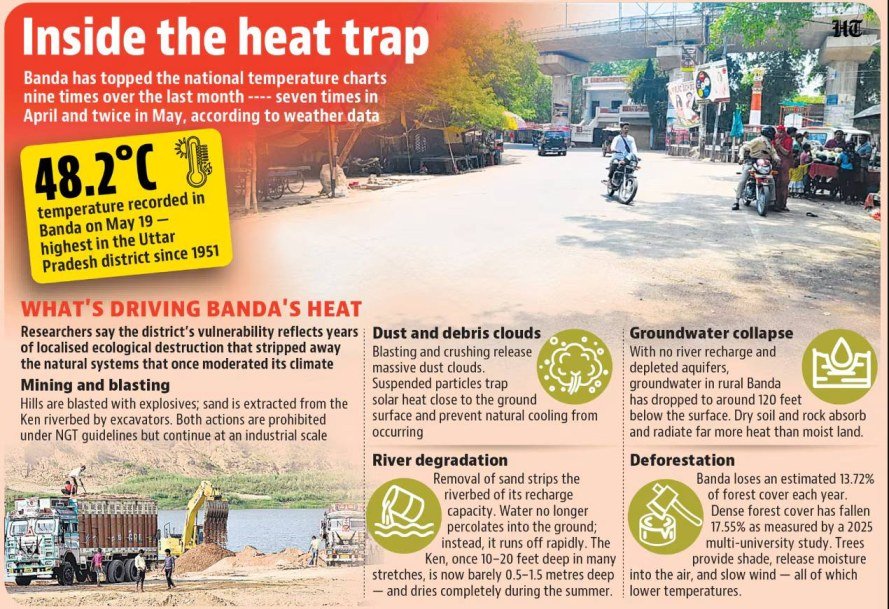
Inside the Heat Trap: Why Banda is Heating Up
Record Heat in Banda
- Banda recorded 48.2°C on 19 May, the highest temperature in the district since 1951.
- The district topped India’s temperature charts multiple times during April and May, reflecting a worsening local heat crisis.
Major Drivers Behind Banda’s Extreme Heat
1. Mining and Blasting
- Extensive hill blasting using explosives and large-scale sand mining in the Ken River region have damaged the natural landscape.
- Continuous ecological degradation has weakened the area’s natural cooling mechanisms.
- Though regulated under environmental guidelines, mining activities continue at an industrial scale in several areas.
2. Dust and Debris Clouds
- Blasting and crushing operations generate large dust clouds.
- Suspended particles trap solar heat close to the ground and reduce natural atmospheric cooling.
- Dust pollution also affects air quality and human health.
3. River Degradation
- Excessive sand extraction has reduced the riverbed’s capacity to retain and recharge water.
- Rainwater now flows away rapidly instead of percolating into the ground.
- The Ken River, once significantly deeper in many stretches, has become shallow and dries up during summers in several areas.
4. Groundwater Collapse
- Lack of river recharge and overexploitation have severely depleted aquifers.
- Groundwater levels in rural Banda have fallen drastically.
- Dry soil and exposed rocks absorb and radiate more heat than moist land, intensifying local temperatures.
5. Deforestation
- Rapid loss of forest cover has reduced shade and moisture in the atmosphere.
- Dense forest cover in the region has declined considerably over time.
- Trees regulate local climate through evapotranspiration, moisture retention, and wind moderation; their loss has intensified heat conditions.
Impact of the Heat Trap
- Increased frequency and intensity of heatwaves.
- Severe water scarcity in rural and urban areas.
- Agricultural stress and declining crop productivity.
- Rising cases of heatstroke, dehydration, and other heat-related illnesses.
- Loss of biodiversity and ecological imbalance.
- Declining quality of life and increased climate vulnerability.
Way Forward
- Strict enforcement against illegal mining and uncontrolled blasting.
- Restoration of river ecosystems and scientific sand mining regulation.
- Groundwater recharge through ponds, check dams, and watershed management.
- Large-scale afforestation and protection of existing forest cover.
- Implementation of Heat Action Plans and climate-resilient urban infrastructure.
- Promotion of sustainable land, water, and resource management practices.
- Community participation in ecological restoration and water conservation.
Conclusion
- The Banda case highlights how localised ecological destruction can intensify climate extremes at the regional level. Unsustainable mining, river degradation, groundwater depletion, and deforestation have collectively transformed Banda into a severe heat trap. The case underlines the urgent need to integrate ecological conservation with climate adaptation and sustainable development policies.