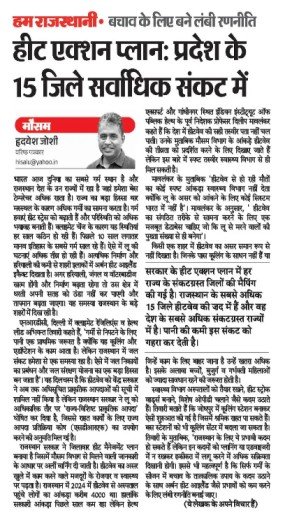
Status of Heatwaves in Rajasthan
-
High-Risk Districts: 15 districts in Rajasthan are currently the most vulnerable to heatwaves.
-
State Vulnerability: Rajasthan is among the most heat-affected states in India, characterized by high base temperatures.
-
The last 11 years have been the hottest in human history, leading to more intense heatwave events.
-
2015-2025 are the hottest 11 years on record- The State of the Global Climate 2025 by World Meteorological Organisation.
-
In 2024, approximately 4,000 people were hospitalized in Rajasthan due to heatwaves.
Key Causes
-
Geographical Factors: The presence of the Thar Desert and hot winds increase "Heat Stress."
-
Urban Heat Island Effect: Excessive construction combined with a lack of greenery and water bodies prevents surfaces from cooling, causing temperatures to rise in cities.
-
Water Crisis: Persistent water shortages in the state deepen the crisis, as water is primary for cooling and adaptation.
-
Climate Change: Annual conditions are becoming increasingly difficult due to global climate shifts.
Steps taken by the Government-
-
Disaster Classification: While the Central Government has not included heatwaves in the list of notified natural disasters, the Rajasthan Government has officially declared it a "State-Specific Natural Disaster."
-
This declaration permits the use of the State Disaster Response Fund (SDRF) for relief measures.
-
Heat Management Plan: A district-level plan has been created by Govt of Rajasthan to provide early warnings based on Meteorological Department data.
-
Health Department Initiatives: Preparing hospitals, creating heat-stroke wards, and operating special OPDs.
Way Forward
-
Cooling Stations: Establishing dedicated stations for laborers (initiated in Jodhpur) and converting bus stations into cooling centers.
-
Database Management: Experts emphasize the need for a strong database from the Health Department to accurately track heat-related deaths and intensity.
-
Vulnerable Groups: Increased caution is required for outdoor laborers, children, the elderly, and pregnant women.
-
Implementation: Shifting focus from just planning and advisories to active reality-based implementation.
-
Environmental Planning: Developing long-term strategies to reduce the Urban Heat Island effect by restoring greenery, forests, and water bodies.
Source: