Introduction
- India has emerged as one of the fastest-growing renewable energy markets in the world. Over the past decade, solar power capacity has expanded rapidly due to government incentives, falling technology costs, and increasing awareness about clean energy. States such as Rajasthan, Gujarat, and Tamil Nadu have become major hubs for solar energy generation.
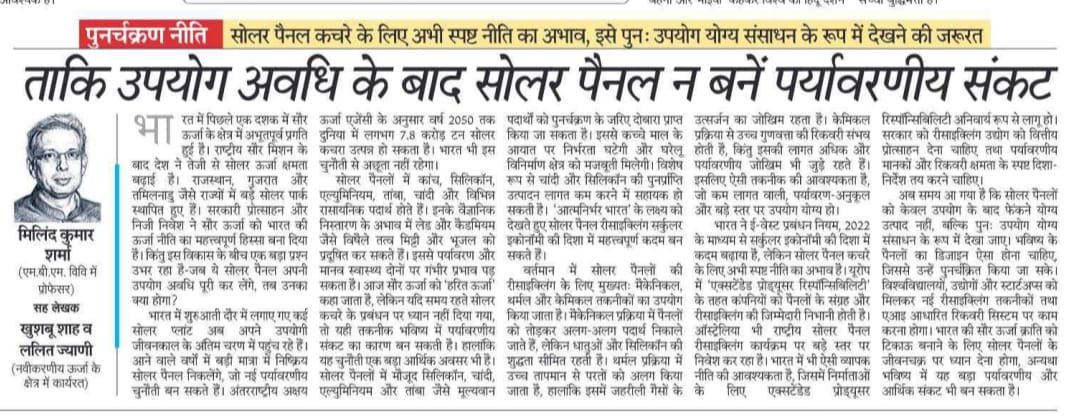
- However, alongside this impressive growth, a serious environmental challenge is slowly emerging — the management of solar panel waste after the end of their operational life. Most solar panels have a lifespan of around 20–25 years. As early-generation panels begin reaching the end of their usage cycle, the world will face an enormous volume of solar waste in the coming decades.
- If not handled properly, discarded solar panels could create a new environmental and public health crisis.
Rising Global Concern Over Solar Waste
- According to the International Renewable Energy Agency (IRENA):
- By 2050, the world could generate nearly:
- 78 million tonnes of solar panel waste
- India is also expected to contribute significantly to this waste stream due to its rapidly expanding solar infrastructure.
- The challenge is not only about disposal but also about:
- Resource recovery
- Recycling technology
- Environmental safety
- Circular economy integration
Why Solar Panel Waste is Dangerous
Solar panels contain several valuable but hazardous materials such as:
- Silicon
- Glass
- Aluminum
- Silver
- Copper
At the same time, many panels also contain toxic substances like:
- Lead
- Cadmium
- Certain chemical compounds
If dumped irresponsibly:
- Toxic metals can leak into soil and groundwater
- Air pollution risks may increase
- Human health may be affected
- Ecosystems can face long-term contamination
India’s Solar Expansion and the Coming Waste Challenge
India has aggressively expanded solar power under:
- National Solar Mission
- Renewable energy targets
- Green energy transition plans
Important Facts:
- India aims to achieve:
- 500 GW non-fossil fuel capacity by 2030
- Solar power is expected to contribute a major share.
- India is among the world’s top solar energy producers.
⇒ While this transition is environmentally beneficial, it also means that millions of solar panels installed today will eventually become waste.
Why Recycling Solar Panels is Important
Solar panels are not merely waste; they are also a source of valuable recyclable materials.
- Through proper recycling:
- Glass can be reused
- Aluminum frames can be recovered
- Silver and copper can be extracted
- Silicon materials can be reused in manufacturing
- This reduces:
- Dependence on raw material imports
- Environmental damage from mining
- Overall waste generation
Current Challenges in Solar Panel Recycling
1. Lack of Clear Policy Framework
- India still lacks a comprehensive and dedicated policy for:
- Solar waste collection
- Transportation
- Recycling standards
- Disposal mechanisms
2. Limited Recycling Infrastructure
- Currently:
- Specialized recycling plants are very limited
- Most e-waste facilities are not equipped for solar waste
- High-quality recovery technologies are expensive
3. High Cost of Recycling
- Recovering valuable materials requires:
- Advanced technology
- Chemical treatment
- Skilled labour
⇒ This makes recycling economically difficult without policy support.
4. Informal Waste Handling Risks
Like electronic waste, solar waste could also enter the informal sector where:
- Unsafe dismantling practices may occur
- Toxic exposure risks may increase
- Environmental safeguards may be absent
Need for Circular Economy Approach
Experts argue that solar panels should not be viewed as disposable products.
- Instead, countries must adopt
- Circular Economy Principles
This means:
- Designing panels for easy recycling
- Reusing components
- Recovering valuable resources
- Minimising landfill disposal
What is the World Doing?
- European Union (EU)
- The EU has already included solar panels under:
- Waste Electrical and Electronic Equipment (WEEE) Directive
- This makes manufacturers responsible for:
- Collection
- Recycling
- Proper disposal
International Best Practices
- Countries are investing in:
- Extended Producer Responsibility (EPR)
- Advanced recycling technologies
- Sustainable panel design
- Resource recovery systems
India’s Policy Efforts
- India introduced:
- E-Waste Management Rules, 2022
- These rules are a positive step toward responsible waste handling. However:
- Solar waste-specific guidelines are still evolving
- Dedicated implementation mechanisms remain limited
- Experts suggest India urgently needs:
- National solar waste policy
- Recycling targets
- Industry standards
- Investment in recycling infrastructure
Opportunities Hidden in Solar Waste
The solar recycling industry itself can become a major economic sector.
- Potential Benefits:
- Green jobs creation
- Recycling industry growth
- Reduced import dependence
- Resource security
- Sustainable manufacturing ecosystem
- This can support India’s:
- Green economy
- Sustainable industrialisation
- Climate commitments
What Should India Do?
1. Develop a Dedicated Solar Waste Policy
- A comprehensive framework is essential.
2. Promote Recycling Industry
- Provide incentives for:
- Recycling plants
- Technology development
- Private investment
3. Enforce Extended Producer Responsibility (EPR)
- Manufacturers should take responsibility for:
- Collection
- Recycling
- Safe disposal
4. Invest in Research and Innovation
- India must develop:
- Low-cost recycling technologies
- Environment-friendly processing systems
5. Build Public Awareness
- Consumers and industries must understand:
- Safe disposal methods
- Recycling importance
- Environmental risks
Environmental Significance
- Poorly managed solar waste can:
- Undermine clean energy goals
- Create toxic pollution
- Increase landfill pressure
→ Therefore, sustainable renewable energy must include
→ Sustainable waste management
Relevance for UPSC / RAS
Important Topics:
- Renewable Energy
- Circular Economy
- E-Waste Management
- Environmental Governance
- Sustainable Development
- Climate Change
- Green Energy Transition
Conclusion
- Solar energy is essential for achieving climate goals and reducing dependence on fossil fuels. However, the clean energy transition cannot be considered truly sustainable unless the waste generated by renewable technologies is also managed responsibly.
- India must act proactively by creating strong recycling systems, clear policies, and circular economy mechanisms before solar panel waste becomes a large-scale environmental challenge.
- The future of renewable energy will depend not only on how much clean energy we generate, but also on how responsibly we manage the waste it creates.