Introduction:-
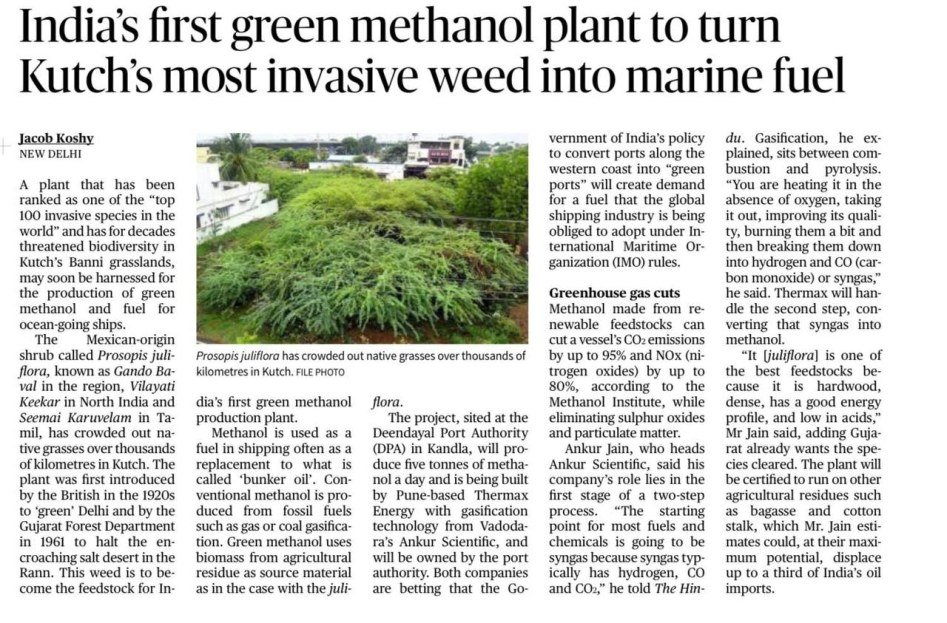
- India is setting up its first green methanol plant in Kutch, Gujarat, using Prosopis juliflora, an invasive weed that has long threatened the Banni grasslands. The initiative aims to convert an ecological problem into a sustainable source of marine fuel.
About the Feedstock
- Prosopis juliflora, a Mexican-origin shrub locally known as Gando Baval or Vilayati keekar, has spread aggressively across Kutch, displacing native grasses and reducing biodiversity. Initially introduced during the colonial period and later promoted to check desertification, it is now being repurposed as a biomass feedstock.
What is Green Methanol?
- Green methanol is produced from renewable sources such as biomass, unlike conventional methanol derived from fossil fuels. It is increasingly being considered as an alternative to bunker fuel in the shipping industry due to its lower emissions.
Project Details
- The plant is located at the Deendayal Port Authority (Kandla) and is expected to produce about five tonnes of methanol per day. It is being developed by Thermax Energy with gasification technology from Ankur Scientific. The process involves converting biomass into syngas (a mixture of hydrogen and carbon monoxide), which is then transformed into methanol.
Environmental Benefits
- Methanol produced from renewable feedstock can significantly reduce emissions. According to the article, it can cut CO₂ emissions by up to 95% and NOx emissions by around 80%, while also eliminating sulphur oxides and particulate matter. Additionally, it helps control the spread of an invasive species.
Strategic Significance
- The project aligns with India’s policy to develop “green ports” along the western coast and supports global shipping regulations under the International Maritime Organization (IMO). It also contributes to reducing dependence on fossil fuels and imported oil.
Future Potential
- The plant can also use other biomass sources such as bagasse and cotton stalk. At its maximum potential, such initiatives could displace up to one-third of India’s oil imports, indicating strong scalability and long-term relevance.
Conclusion
- This project represents an innovative approach that integrates environmental management with clean energy production. By converting an invasive weed into a valuable fuel, it highlights a practical pathway towards sustainable development and green growth.