
Desertification & Drought-
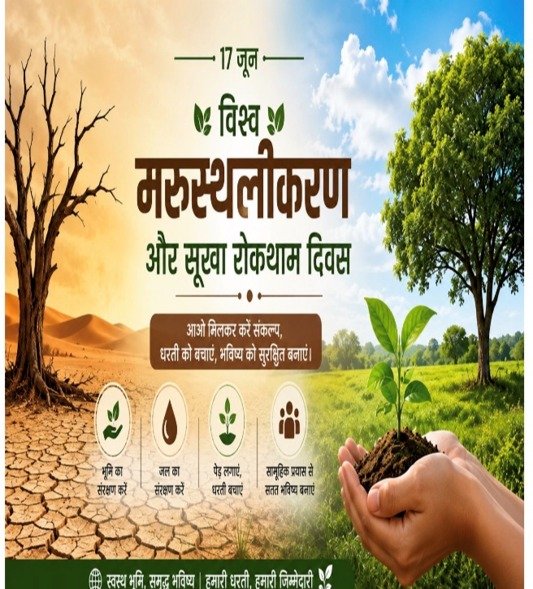
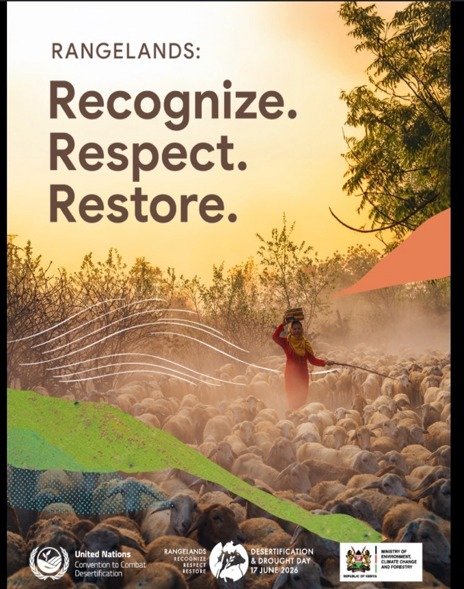
World Day to Combat Desertification & Drought
- Date -17 June (annually)
- Established by - United Nations 1994
- Purpose - Raise awareness, promote collective action against desertification and drought.
- Convention - UNCCD { United Nations Convention to Combat Desertification (1994)}
- Theme of this year - "Rangelands: Recognise. Respect. Restore"
- Theme significance - Not just an environmental observance a symbol of global commitment to protecting Earth and ensuring sustainable future for humanity.
 |
 |
Definition
- Desertification is NOT merely the expansion of deserts. It is the process by which land in dry, semi-dry, and sub-humid areas gradually loses its fertility, productivity, and life-sustaining capacity due to natural and human causes.
- UN definition (UNCCD) -Land degradation in arid, semi-arid, and dry sub-humid areas resulting from various factors, including climatic variations and human activities.
Key indicators of desertification-
- Soil erosion and degradation.
- Decline in soil fertility.
- Destruction of vegetation cover.
- Falling groundwater levels.
- Loss of biodiversity.
- Decline in agricultural productivity.
Causes of Desertification -
1. Climate Change- Rising temperatures, irregular rainfall, prolonged droughts, and intense hot winds reduce soil moisture. Soil structure weakens and land gradually becomes barren.
2. Deforestation - Forests protect soil, balance the water cycle, and regulate local climate. Large-scale forest destruction increases soil erosion, affects rainfall, and reduces land productivity.
3. Unsustainable Agricultural Practices - Excessive chemical fertiliser use, mono-cropping, uncontrolled irrigation, and overexploitation of land weaken soil quality. Land gradually loses its fertility.
4. Overgrazing - Excessive livestock grazing destroys grasses and small plants. Exposed soil becomes vulnerable to wind and water erosion.
5. Unplanned Urbanisation & Industrialisation- Mining, road construction, industrial expansion, and uncontrolled urbanisation accelerate land degradation. Development without environmental balance adversely affects land quality.
Types of Drought -
| Type | Description |
|
Meteorological drought |
Rainfall below normal |
|
Agricultural drought |
Insufficient soil moisture |
|
Hydrological drought |
Rivers, lakes, and groundwater sources affected |
|
Socio-economic drought |
Water scarcity affects lives and economy |
Impacts -
- On Soil - Topsoil formation takes hundreds to thousands of years but its destruction can occur in a few years. Soil degradation reduces water-holding capacity and affects agricultural production.
- On Water - As land quality declines, rainwater harvesting reduces , groundwater recharge decreases and wells and ponds dry up due water availability falls.
- On Climate - Healthy soil absorbs carbon helping regulate climate change. Land degradation reduces this capacity greenhouse gas concentrations in atmosphere increase.
- On Food Security - When land productivity falls food production is affected food shortages, price rise, malnutrition, hunger, poverty, rural economic crisis. Farmers are most severely affected reduced production, increased debt burden, rural outmigration accelerates.
- On Biodiversity - Plant species extinction, loss of wildlife habitat, threat to pollinators (bees, butterflies) direct impact on agricultural production.
- On Public Health - Food shortage cause malnutrition; lack of clean water cause waterborne diseases; dust from dry land and respiratory diseases.
India's Desertification Status -
- Affected states - Rajasthan, Gujarat, Haryana, Punjab, Maharashtra, Madhya Pradesh, Karnataka, and several parts of the Deccan plateau.
- Key causes in India: Deforestation, overexploitation of groundwater, unsustainable agricultural practices, industrial expansion, climate change.
- Government measures: Land conservation programmes, water conservation, watershed development, afforestation schemes.
Key data for answer -
- About 29.7% of India's total land area is undergoing land degradation (ISRO's Desertification and Land Degradation Atlas).
- India committed at UNCCD COP14 (2019, New Delhi) to restore 26 million hectares of degraded land by 2030 (up from earlier target of 21 million hectares).
- India hosted UNCCD COP14 in Greater Noida (2019) first time in India.
- India's target contributes to the Bonn Challenge (restore 350 million hectares globally by 2030).
Indian Culture and Nature Conservation -
India's civilisational relationship with the Earth
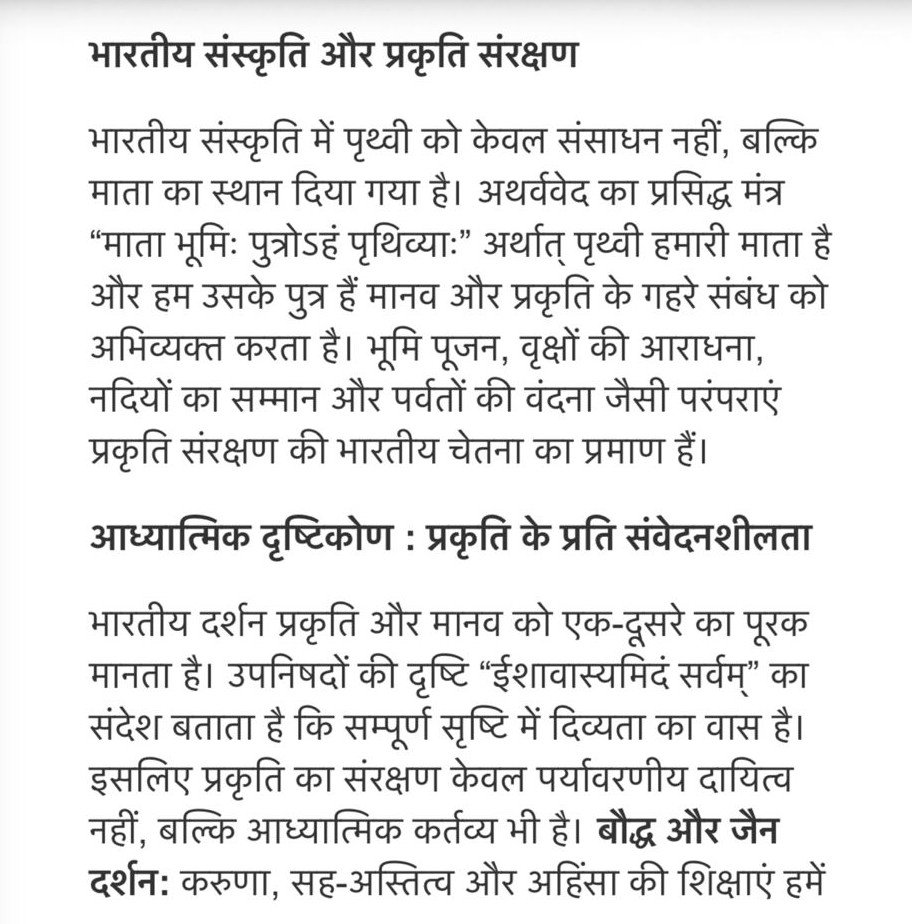
- Vedic tradition - Atharvaveda mantra - "माता भूमिः पुत्रोऽहं पृथिव्याः" (Earth is our mother and we are her children) - expresses the deep bond between humans and nature.
- Practices - Bhoomi Pujan (land worship), tree worship, reverence for rivers (Ganga, Yamuna), veneration of mountains all reflect India's tradition of nature conservation.
Philosophical basis
- Upanishadic view: "ईशावास्यमिदं सर्वम्" - the divine pervades all creation to protecting nature is a spiritual duty, not just environmental responsibility.
- Buddhist and Jain philosophy: Compassion (Karuna), co-existence, non-violence (Ahimsa) sensitivity toward every living being and plant are foundation of environmental conservation.
- Gandhi's message: "The Earth can meet every person's need, but not anyone's greed" more relevant than ever in today's consumerist age
Solutions -
- Afforestation and forest conservation - Protection of natural forests and large-scale tree planting is the most effective way to revitalise land.
- Water conservation - Rainwater harvesting, revival of ponds, check dam construction, groundwater recharge can reduce water crisis.
- Sustainable agriculture - Organic farming, crop rotation, micro-irrigation, and soil conservation techniques are essential.
- Pasture management - Controlled grazing and grassland development can prevent land degradation.
- Environmental education and public participation - No conservation campaign can succeed without awareness and community participation.
- Youth power - Young people can lead afforestation drives, spread awareness on water conservation, develop green technologies, and guide society toward sustainable development.
- Green economy - Future development model must balance economic progress and environmental protection Green Economy concept.
Conclusion -
- Implement Land Degradation Neutrality through integrated watershed management; scale up PM Krishi Sinchayee Yojana with focus on micro-irrigation; promote traditional Indian knowledge in soil conservation; strengthen UNCCD commitments; deploy ISRO's satellite-based monitoring for real-time land degradation tracking; integrate youth and community participation in afforestation drives; align India's 26 million hectare restoration target with Bonn Challenge and SDG 15.
♦ Important Mains question
1. Desertification is not merely an environmental crisis but a multi-dimensional threat to human civilisation. Examine the causes, impacts, and India's approach to combating land degradation?